How to use this patient guide
This guide is intended to help you prepare questions and understand practical directory information. It does not replace advice from your doctor, referrer, clinic, insurer, ACC, or Health New Zealand service. Confirm any instructions, preparation steps, timing, and costs with the clinic before your appointment.
For communication access, use the guide to interpreter, NZSL, accessible-information and support-person requests before booking.
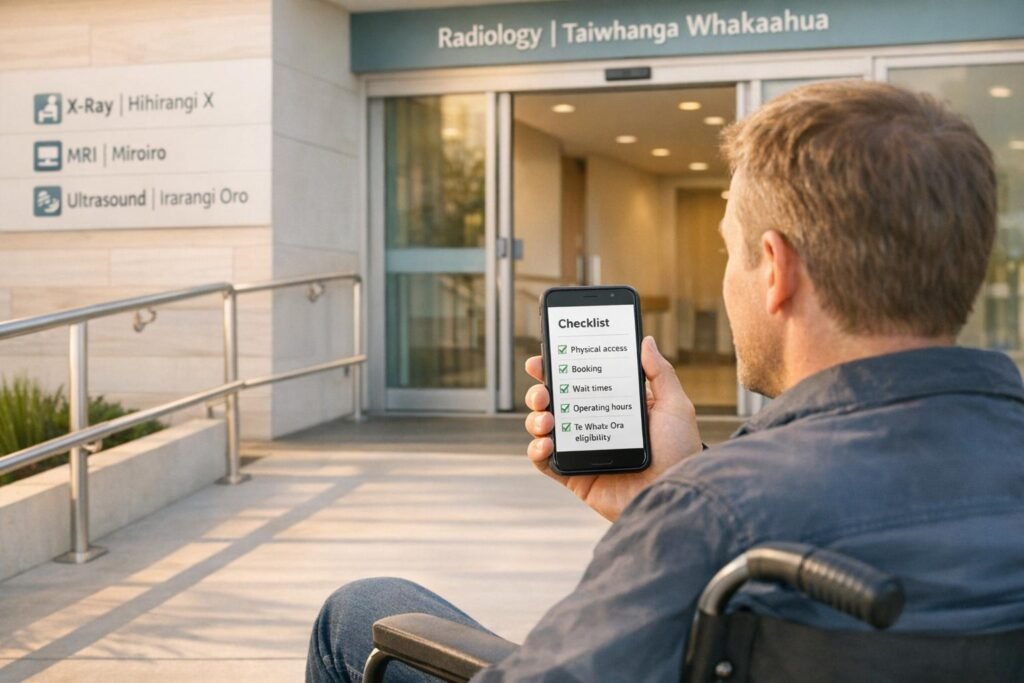
Finding the best radiology clinic in New Zealand involves more than just proximity. Accessibility, convenience, and service quality are key. Here’s what you need to know:
- Physical Access: Ensure features like wheelchair ramps, automatic doors, accessible parking, and wide corridors are in place.
- Booking and Wait Times: Look for online booking options, same-day waitlists, and clinics with shorter wait times, especially for private services.
- Operating Hours: Some clinics offer after-hours or weekend availability, while others stick to standard weekday hours.
- Patient Reviews: Check feedback for insights on staff behaviour, wait times, and overall experience.
- Cost and Financial Aid: Verify if your referral qualifies for free imaging under Te Whatu Ora‘s community programme, which aims to reduce barriers to care.
Quick Tip: Always confirm parking availability and transport options to avoid last-minute surprises. For a smooth experience, choose a clinic that aligns with your mobility, scheduling, and financial needs.
Physical Access Features
Radiology Clinic Accessibility Features: Common Barriers vs Ideal Standards
Building and Facility Access
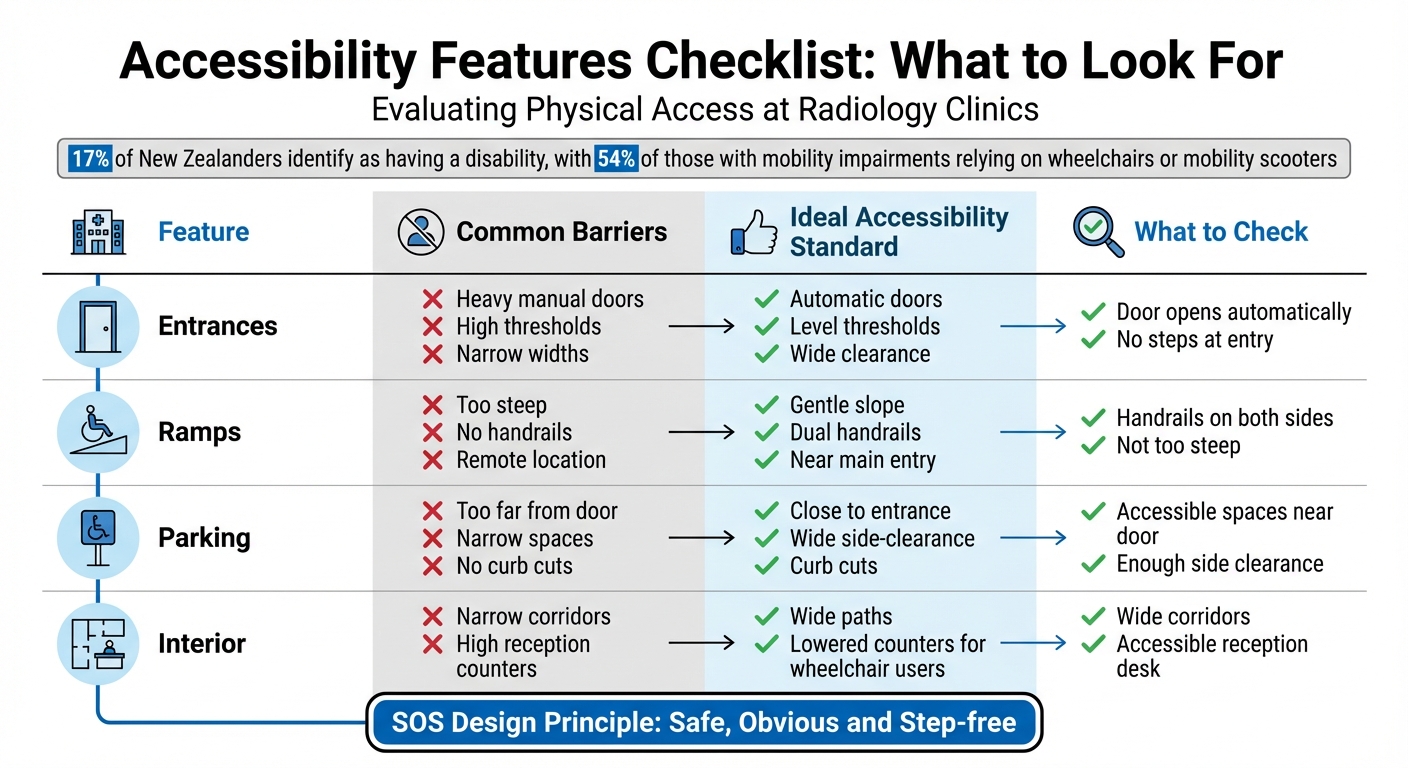
In New Zealand, 17% of people identify as having a disability, and among those with mobility impairments, 54% rely on wheelchairs or mobility scooters. This makes the design of building entrances a critical factor when selecting a radiology clinic.
Clinics that follow the "Safe, Obvious and Step-free (SOS)" design principles prioritise features like automatic-opening doors, which eliminate the need for heavy manual doors – a common barrier to independent access. Researchers Claire Flemmer and Alison McIntosh highlighted another frequent issue:
"The most reported barrier outside buildings is the condition of the path; rough surfaces, cracks and potholes are problematic".
Some clinics have taken active steps to improve accessibility. For example, Allevia Radiology in Botany, Auckland, located within Eastcare Medical Clinic, offers accessible parking, wheelchair-friendly toilets, and designated access points as of November 2025. Similarly, North Canterbury Xray in Rangiora, located at 237c High Street, provides wheelchair access and utilises the nearby Waimakariri District Council car park for added convenience.
When assessing a clinic, pay close attention to ramps – ensure they have handrails and aren’t too steep. Check that accessible parking spaces are close to the entrance and offer enough side clearance. For upper-level clinics, confirm that lifts can accommodate larger mobility scooters. Inside the clinic, look for wide corridors, lowered reception desks, and accessible toilets with sufficient clearance.
| Feature | Common Barriers | Ideal Accessibility Standard |
|---|---|---|
| Entrances | Heavy manual doors, high thresholds, narrow widths | Automatic doors, level thresholds, wide clearance |
| Ramps | Too steep, no handrails, remote location | Gentle slope, dual handrails, near main entry |
| Parking | Too far from door, narrow spaces, no curb cuts | Close to entrance, wide side-clearance, curb cuts |
| Interior | Narrow corridors, high reception counters | Wide paths, lowered counters for wheelchair users |
Evaluate these features during your visit to ensure the clinic meets accessibility needs.
Location and Transport Options
Accessibility extends beyond the building itself to include transport and parking options.
Parking availability can fluctuate due to local construction projects. For instance, in March 2026, Auckland Radiology‘s Wellington (Newtown – Wakefield) branch faced significant parking shortages due to ongoing Wellington City Council works. The clinic encouraged patients to use "public transport, rideshare, or arrange a pickup".
In contrast, North Canterbury Xray offers more convenient options, including access to the Waimakariri District Council car park at the rear of their clinic and short-stay spaces directly outside their High Street entrance. Always check the clinic’s website for updates on parking restrictions or construction alerts. If parking is limited, explore nearby bus or train routes, or arrange to be dropped off at the entrance.
Waiting Area Design
Once inside, the layout and amenities of waiting areas play a key role in patient comfort.
New Zealand medical practice standards require waiting areas to provide adequate space, seating, heating, lighting, and ventilation. Seating should accommodate patients with mobility needs, offering options like high-back chairs or seats with armrests. The space should also be welcoming for whānau or carers accompanying patients.
Check for seating that supports mobility requirements and ensure signage is clear and easy to read from a distance. Proper ventilation is essential, especially in shared spaces, to maintain a safe and comfortable environment.
Assess these features to ensure the waiting area meets the needs of all patients and their companions.
sbb-itb-16a0ccc
Service Convenience Factors
Beyond just getting to the clinic, the overall convenience of services can significantly influence your experience.
Appointment Booking Options
Radiology clinics in New Zealand have embraced flexibility when it comes to booking appointments, making it easier to fit these visits into your daily life. Many providers now offer online booking systems alongside the traditional phone call method. For example, Astra Radiology and Horizon Radiology use interactive tools to simplify the process, while Lux Radiology allows you to select specific dates and times through live scheduling.
For those who prefer direct communication, clinics often provide dedicated phone lines and email options. Some, like Absolute Radiology and Pacific Radiology, even let you email your referral by taking a photo and sending it to their booking team.
If you’re in need of a plain X-ray – such as for your chest, limbs, or spine – you may not need an appointment at all. Clinics like Horizon Radiology offer walk-in services, provided you bring a doctor’s referral. As they explain:
"You do not need to make an appointment for a plain x-ray (i.e. Chest x-rays, x‑rays of limbs, spine, pelvis etc), you are still required to bring a doctor’s referral with you".
For fully booked days, some clinics offer same-day waitlists. Lux Radiology highlights this option:
"If appointment slots are booked out for any particular dates, you may consider adding yourself to a same day wait list and we will send you notification as soon as a cancellation slot becomes available".
If you’re busy during weekdays, look for clinics with Saturday availability, though this can vary depending on location. Don’t forget to upload your referral form if required – this can save time and streamline the process.
Wait Times
Wait times can vary widely depending on whether you choose public or private services. Public health imaging often faces delays, with some non-urgent scans taking up to 12 weeks from the time of request. By mid-year, more than 18,000 patients in New Zealand were waiting over 42 days for CT or MRI scans, and 13 out of 19 Health NZ districts reported fewer than 65% of MRI scans completed within that timeframe.
Private clinics, on the other hand, typically offer faster service. Some even aim to provide results within 24 hours. Many also use SMS reminders to confirm appointments a day in advance, helping to minimise missed appointments and keep their schedules running smoothly.
With demand for CT and MRI scans growing at an annual rate of 6.5%, it’s worth asking about the expected wait time for your specific scan. Don’t hesitate to inquire about cancellation waitlists, which can help you secure an earlier slot.
Operating Hours
Most community radiology clinics operate during standard business hours, typically Monday to Friday from 8:30 am to 5:00 pm, and are closed on weekends and public holidays. However, some clinics extend their hours to accommodate those with busy schedules.
After-hours clinics are a great option for those needing more flexibility, with some open daily from 8:00 am to 11:00 pm, including weekends. Certain X-ray clinics even offer seven-day services, running from 9:00 am to 5:30 pm. For urgent needs, hospital-based radiology departments often provide 24-hour services, though outpatient bookings are usually limited to regular weekday hours. Pacific Radiology explains their Wakefield Hospital service:
"Pacific Radiology offers 24-hour on-site radiology services at Wakefield Hospital. Our team is available during standard hours, Monday to Friday, from 8:30 am to 5:15 pm, and on‑call outside of these times".
If you’re considering a 24-hour facility, check whether outpatient bookings are available during the extended hours or if those times are reserved for emergencies. Keep in mind that advanced imaging services like MRI or CT scans may not be available during after-hours, as these periods often focus on X-rays and ultrasounds.
Digital Tools and Online Access
How a clinic integrates technology into its services can greatly impact your experience as a patient. A strong digital presence not only improves efficiency but also complements in-person services, creating a smoother overall experience.
Website and Online Booking
Digital tools have made accessing radiology services much simpler, especially when it comes to booking appointments.
Many major radiology networks in New Zealand, like Auckland Radiology, now offer online booking systems. These systems show real-time availability for procedures, including dates, times, and locations, making it easy to schedule without picking up the phone. Bay Radiology also highlights the convenience of its online booking tool, stating:
Scheduling an appointment at Bay Radiology is easy using our online booking tool, where you can select the scan that you need and then see all the days and times available.
When comparing clinics, pay attention to how user-friendly their websites are. For example, Auckland Radiology Group, which operates 14 clinics across Auckland, has a website with searchable sections for clinics and procedures, helping you quickly find the information you need. Some providers, like Astra Radiology, go a step further by offering printable parking instructions and guides for "pay-by-plate" parking terminals, which can reduce pre-appointment stress.
If you’re exploring multiple options, Radiology Clinics NZ (https://radiologyclinics.co.nz) is a helpful directory. It allows you to search for clinics by location, view available services, and read patient reviews – all in one place.
It’s important to note that not all procedures can be booked online. While routine services like X-rays, ultrasounds, and CT scans are typically available for online booking, more complex scans or interventional procedures often require a phone call to coordinate.
Communication Channels
Effective communication options can make interacting with a clinic much easier.
Most radiology providers offer a variety of ways to get in touch, including dedicated phone lines, general enquiry emails, and specific addresses for referrals or pricing requests. Auckland Radiology, for instance, has separate emails for general enquiries and bookings, making it simpler to manage referrals and pricing questions.
Some clinics have upgraded their digital tools to include accessibility features. For example, Astra Radiology and Horizon Radiology use interactive guides with optional voice assistance to walk patients through the booking process. Additionally, many providers now allow you to upload a digital photo or scan of your referral directly through their booking portals, which is especially useful if you don’t have access to a scanner or have difficulty with manual tasks.
If pricing information isn’t readily available, you can usually request an estimate through a dedicated quotes email or online form. It’s also worth checking individual clinic pages for specific arrival details, such as disabled parking or patient drop-off zones, so you can plan your visit with ease.
Patient Reviews and Ratings
Patient reviews can give you insights into factors like accessibility, staff behaviour, and service quality that may not be obvious from clinic websites. Let’s dive into where to find these reviews and how to interpret them effectively.
Finding Reviews Online
A great starting point is Radiology Clinics NZ (https://radiologyclinics.co.nz), a centralised platform featuring 252 radiology imaging clinics across New Zealand. It includes star ratings and written feedback, making it simple to compare options without visiting multiple websites.
Some clinics also showcase reviews directly on their websites. For example, Lux Radiology compiles feedback from Google and direct patient submissions. Additionally, third-party platforms often host reviews; Pacific Radiology’s St George’s branch in Christchurch, for instance, has 54 reviews and 12 comments on local directories.
When browsing reviews, focus on clinics with a substantial number of recent ratings. For instance, Pacific Radiology – Porirua boasts a 5.0/5 rating based on two reviews, while Greenlane Clinical Centre also has a 5.0/5 rating. Once you’ve found reviews, look for patterns that indicate consistent strengths or weaknesses.
Reading Reviews Effectively
Don’t focus on one-off comments; instead, look for recurring themes like ease of parking or wheelchair accessibility. You can use your browser’s search function (Ctrl+F) to quickly find specific keywords in reviews.
Pay attention to mentions of specific staff members. For example, in January 2026, a patient named Gurusajini Thillainathan praised Lux Radiology’s sonographer Adil Mohamed for being "extremely professional" and "very patient." She appreciated how he explained details thoroughly and provided additional printed images. Another review from October 2025 highlighted Pacific Radiology staff members Katherine and Kylie for ensuring the patient’s "utmost comfort" and "dignity" during a CT Colonography, especially in addressing disability needs.
Wait times are another critical factor to monitor. In March 2025, Wayne Moore expressed frustration over a 25-minute delay for a 1:30 PM appointment at Canopy Imaging in Palmerston North, calling it unacceptable. In contrast, Linda Wong’s October 2025 review of Greenlane Clinical Centre praised their "excellent customer service" both in pre-appointment communication and on the day of care.
Cost can also influence the experience. In March 2025, Megan Brake shared that although scans at Lux Radiology cost $20–$30 more, the higher price was justified. She noted benefits like being greeted by name and receiving printed photos, which were not offered at less expensive clinics. This suggests that spending a bit more might result in a noticeably better experience.
These reviews can help you verify whether a clinic meets your expectations, especially when it comes to accessibility and overall service quality.
Conclusion
Finding the right radiology clinic can feel overwhelming, but a clear checklist can make the process much easier. Start by ensuring the clinic meets your physical accessibility needs, such as entryways and mobility features that accommodate you comfortably. Next, consider service convenience – look for features like online booking, walk-in X-ray options, and operating hours that align with your schedule.
Financial accessibility is another key factor. Check whether your referral qualifies for the Health New Zealand (Te Whatu Ora) programme, which provides free community-referred imaging. This initiative, backed by a $30 million annual investment, aims to remove co-payment barriers and reduce delays in treatment. It’s set to be fully operational by July 2026.
"Improved access to timely and effective radiology is critical to providing high quality care, reducing waiting times for treatment and improving outcomes." – Health New Zealand | Te Whatu Ora
Finally, don’t overlook patient feedback. Online reviews can offer valuable insights into aspects like wait times, staff interactions, and communication. In fact, around 81% of patients check online reviews before choosing a healthcare provider. These reviews often provide a full picture of the patient experience, from scheduling to billing.
FAQs
What should I ask a clinic to confirm wheelchair access?
When confirming wheelchair access at a clinic, it’s important to ask if the facility is fully accessible for wheelchair users. Look for features such as ramps, wide doorways, wheelchair-friendly entrances, and accessible toilets. Additionally, ask whether their equipment and examination rooms are set up to accommodate those with mobility challenges. These details can make a big difference in ensuring a comfortable and hassle-free visit.
Do I need an appointment for my X-ray?
In many cases, you don’t need an appointment for an X-ray. Just bring your referral and visit the clinic during their operating hours. That said, it’s smart to double-check the clinic’s specific requirements ahead of time.
Can my scan be free under Te Whatu Ora?
If your scan is part of publicly funded community radiology or hospital services under Te Whatu Ora, it might be free. This includes procedures like x-rays and certain tests performed in public hospitals. To be sure, check with your healthcare provider to confirm if you’re eligible.
Related Blog Posts
- 7 Tips for Finding a Radiology Clinic Near You
- Public vs Private Radiology: Comparing Your Options
- Best Radiology Services for Families in Auckland
- Top Clinics Offering High-Resolution Imaging in NZ

Author: Dr. Mark Bekhit
Dr Mark Bekhit (MBChB, FRANZCR) is a musculoskeletal radiologist practising in Brisbane and an AHPRA-registered specialist in diagnostic radiology (MED0002920947). He spends as much time building software as reading scans: he founded Imaging Finder (Australia) and Radiology Clinics NZ to make imaging easier to find, and builds radiology dictation and pain-tracking tools with one aim — better patient outcomes and a smoother reporting workflow. Outside the reading room he's usually training, bringing the same performance mindset to imaging.
Sources, method, and medical context
This article is published by Radiology Clinics NZ and reviewed for medical-adjacent accuracy by Dr. Mark Bekhit, radiologist. It is general information only and does not replace advice from your own doctor, referrer, clinic, insurer, ACC, or Health New Zealand service.
How this list was selected
List-style articles on this site are based on visible directory signals such as clinic location, brand coverage, listed scan services, and whether the clinic has enough public information to compare. They are not paid rankings, clinical endorsements, or a guarantee that a clinic is the best option for a particular patient.
Official references
- Health New Zealand: scans and X-rays
- Health New Zealand: community-referred radiology service
- ACC: high-tech imaging services operational guidelines
- Radiology Clinics NZ: how the directory is built
Related directory pages
Radiology clinics directoryBrowse by scan typeBrowse by cityHow this directory is built
Last editorial review: 2026-06-30.
Leave a Reply