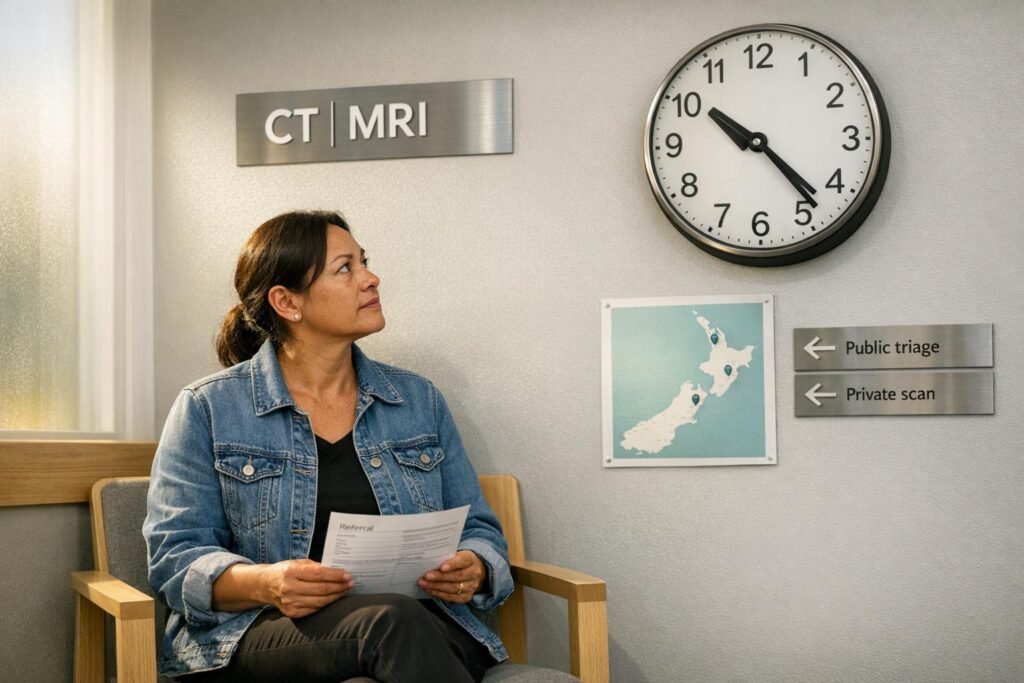
Important access and funding context
Radiology access, public funding, ACC coverage, screening eligibility, wait times, and appointment availability can change and may depend on referral details. Use this article as general orientation only, then confirm the current pathway with your doctor, referrer, clinic, insurer, ACC, or Health New Zealand service as relevant.
Radiology wait times in New Zealand are causing concern, with over 18,000 patients waiting more than 42 days for CT or MRI scans by mid-2025. These delays disrupt critical treatments for conditions like cancer, chronic pain, and stroke, leaving patients in distress. The main causes include staff shortages, outdated equipment, and growing demand for imaging services. For example, only 6 out of 19 districts met MRI wait time targets in May 2025, and some regions, like Waitematā, fell far behind.
Key points:
- Staff shortages: Many hospitals lack radiologists, with some operating at less than 50% of required staff.
- Equipment issues: 44% of imaging equipment is reported as old or unreliable.
- Demand growth: Imaging needs are increasing by 6.5% annually, driven by an ageing population and medical advancements.
- Regional disparities: Wait times vary significantly, with Whanganui performing well, while urban centres like Waitematā struggle.
If you’re waiting for a scan, understanding how public hospitals prioritise cases can help. Urgent referrals and direct GP referrals for imaging may reduce delays. Private radiology services, though costly, offer faster access, with MRI costs ranging from $799 to $1,089. For public imaging, check your district’s wait times or use tools like Radiology Clinics NZ to explore options.
Radiology delays are a challenge, but knowing your options – whether public or private – can help you navigate the system effectively.
Radiology Wait Times Across New Zealand
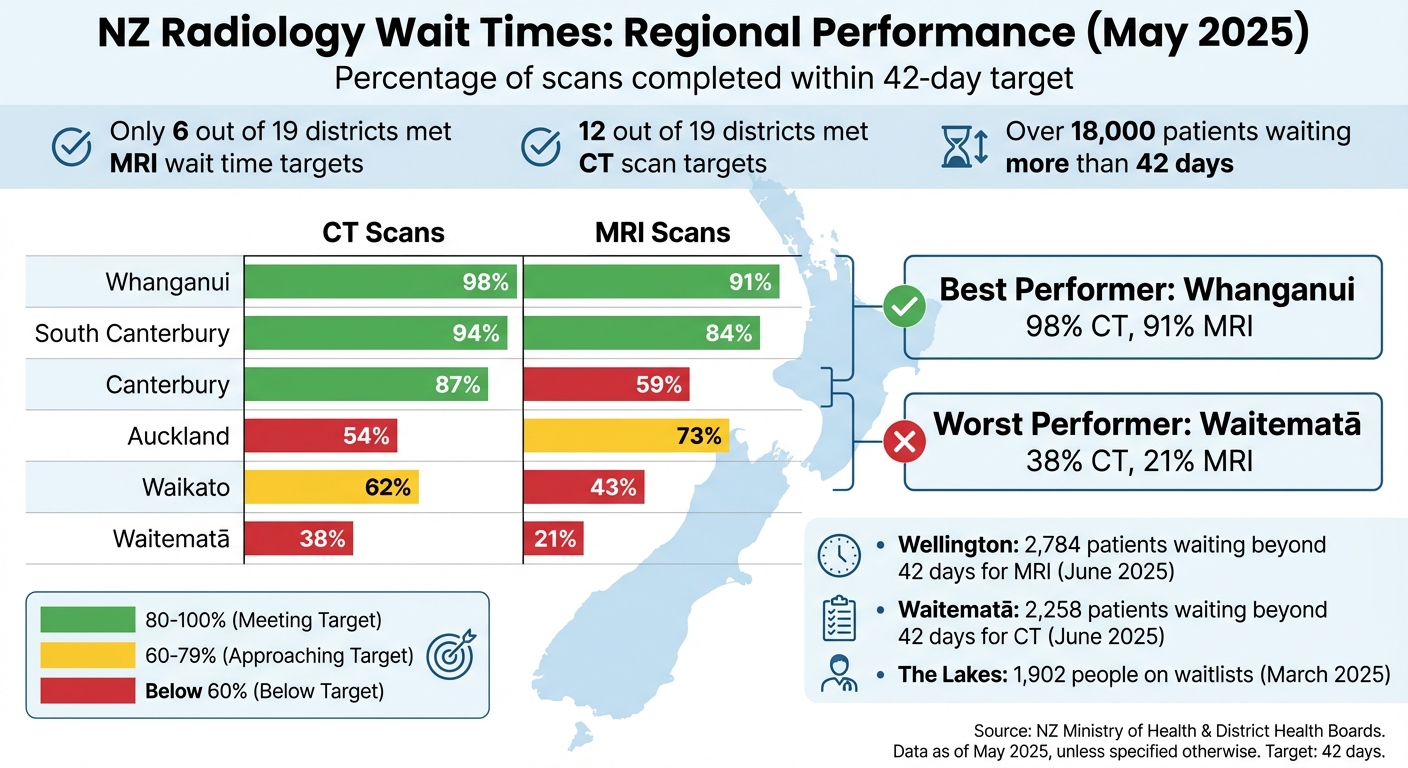
New Zealand Radiology Wait Times by District: CT and MRI Performance May 2025
Wait Times by Region and Service Type
Radiology wait times across New Zealand reveal significant regional differences. By May 2025, only 6 out of 19 districts managed to scan and report on 65% of MRI patients within the 42-day target. For CT scans, 12 districts hit this benchmark. The gap between regions is striking – Whanganui excelled with 98% of CT scans and 91% of MRIs completed within the timeframe, while Waitematā, an urban centre, lagged far behind at just 38% for CT scans and 21% for MRIs.
MRI scans consistently face longer delays compared to CT scans. In Wellington alone, 2,784 patients were waiting beyond 42 days for an MRI by June 2025. Over in Waitematā, 2,258 patients were stuck waiting for CT scans past the target timeframe. The Lakes region also struggled, with 1,902 people on waitlists as of 1 March 2025. Ultrasound and X-ray services were particularly backlogged, with 1,126 and 456 patients waiting, respectively.
| District | CT Scans (%) | MRI Scans (%) |
|---|---|---|
| Whanganui | 98% | 91% |
| South Canterbury | 94% | 84% |
| Canterbury | 87% | 59% |
| Auckland | 54% | 73% |
| Waikato | 62% | 43% |
| Waitematā | 38% | 21% |
Percentage of scans completed within 42 days, May 2025
These numbers underscore not only the regional challenges but also the strain on healthcare systems and the people relying on them.
How Delays Affect Patients and Healthcare Providers
Long radiology wait times ripple through the healthcare system, causing delays in surgeries, treatments, and diagnoses. This leaves patients enduring unnecessary pain and anxiety. At Starship Hospital, for example, children faced an average wait of 94 days for non-urgent MRIs.
Healthcare providers are feeling the strain too. Many teams are understaffed and working with equipment that 44% of Medical Imaging Technologists have described as outdated, broken, or unsafe. In some areas, like Auckland, even acute or urgent scans – typically prioritised – are now being added to waitlists. Meanwhile, demand for CT and MRI scans continues to grow, increasing by 6.5% annually. This combination of rising demand and limited resources is pushing the system to its limits.
sbb-itb-16a0ccc
What Causes Radiology Delays in New Zealand
Staff and Equipment Shortages
Public hospitals are struggling to retain experienced staff, who are increasingly drawn to private clinics and opportunities overseas. For instance, Taranaki operates with just 4.5 of the 9 radiologists it needs, Nelson has 3.6 out of 6.5, and Counties Manukau is managing with only 35 of the 50 radiologists required. Across the Tasman, Australian hospitals are enticing Kiwi radiologists with salaries that are about 30% higher, along with relocation perks like paid accommodation. While efforts to recruit internationally are underway, registration processes often slow things down. In Waikato, the shortage of medical imaging staff ranges between 17% and 38% of what’s needed.
The situation is made worse by outdated and unreliable equipment. Over 44% of Medical Imaging Technologists report working with tools that are broken, old, or even unsafe. A stark example occurred at Wellington Hospital in April 2022, when its MRI scanner broke down and stayed out of service for three weeks, pushing outpatient wait times to as long as seven weeks.
Growing Demand for Imaging Services
Demand for imaging services like CT and MRI scans is climbing at an annual rate of 6.5%. This surge is partly due to New Zealand’s ageing population, as older individuals often require advanced imaging for chronic illnesses, cancer, and heart-related conditions. Additionally, medical advancements have expanded the range of diagnosable conditions, driving up referrals. However, the gap between supply and demand continues to grow, forcing even urgent and acute cases onto lengthy waitlists.
Training and Funding Limitations
Shortcomings in training and funding are directly linked to longer wait times. The current training pipeline isn’t keeping pace with demand or the growing number of retirements. Between 2018 and 2023, the number of radiology consultants grew by just 3.5% annually, while trainee numbers increased by a mere 1.5%. Professor John Slavotinek, President of the Royal Australian and New Zealand College of Radiologists, highlighted the issue:
"We are not training enough radiation oncologists to meet current, or future, service demand or to replace those practitioners who plan to retire".
In the year ending March 2025, Health New Zealand spent over $100 million outsourcing scans to private providers. Critics argue that this money could have been better spent addressing staffing and equipment issues within public hospitals. Meanwhile, several hospitals – including those in Hawke’s Bay, Southland, and Palmerston North – have lost their IANZ accreditation due to ongoing workforce and equipment shortages. Despite this, they continue operating under conditions deemed high-risk. These pressures have led to some of the highest burnout rates among medical professionals, with staff in public hospitals facing relentless workloads and limited support. Together, these factors paint a challenging picture for achieving timely imaging services.
How to Manage Radiology Wait Times
How Public Sector Prioritisation Works
Public hospitals use a clinical triage system to prioritise scans, operating through four regional hubs: Northern, Te Manawa Taki, Central, and Te Waipounamu. This system ensures GP referrals align with national criteria. Now, GPs and Nurse Practitioners can directly refer patients for CT scans, ultrasounds, and X-rays, removing the need for a hospital specialist or emergency department referral. Health New Zealand has set a target for districts to scan and report 65% of MRI and CT patients within 42 days. However, as of May 2025, 13 out of 19 districts missed this target for MRI scans, while 7 out of 19 districts fell short for CT scans. Non-urgent cases often face longer delays. To improve early diagnosis, especially for cancer, the system now uses Community HealthPathways, a digital tool that matches symptoms with the appropriate imaging. Enhanced Access services also provide health navigators to help patients overcome barriers to care. For urgent cases, alternative referral options are available to speed up the process.
Getting Urgent Imaging Services
For patients needing immediate scans, urgent imaging pathways offer faster solutions. Your GP or Urgent Care doctor can now directly refer you for imaging, a process that previously required specialist involvement. A study involving 150 GPs and 550 MRI referrals demonstrated that direct GP referrals reduced wait times from 21 days to just 5 days. Dr Stephen Kara, who led the study, explained:
"The direct referral pathway significantly reduces wait times from referral to MRI report, down from three weeks to an average of five days, creating a much better patient experience".
This streamlined approach builds on the clinical triage system to minimise delays. Ask your GP if they are accredited for direct MRI referrals, as this can bypass specialist waitlists and dramatically reduce waiting times. Additionally, check if your condition meets the National Clinical Criteria for direct referrals. If navigating the system feels overwhelming, health navigators in your region can provide guidance.
In cases of severe backlogs, such as when Taranaki Base Hospital faced over 6,000 unprocessed radiology reports in March 2025, Health New Zealand turned to private imaging providers to clear the backlog. By late 2025, this issue was resolved, with results sent directly to patients’ GPs. If your district is struggling with delays, ask your doctor whether private provider outsourcing is being used to address the issue. For those unable to wait in the public system, private radiology services may be a faster alternative.
Public vs Private Radiology Services
The main difference between public and private radiology services comes down to cost and speed. Public radiology is free for eligible patients, thanks to a $30 million annual investment in Community Referred Radiology, which ensures GP-referred X-rays, CTs, and ultrasounds remain free at the point of care. Private radiology, on the other hand, requires out-of-pocket payments or insurance but offers much faster access.
| Feature | Public Radiology | Private Radiology |
|---|---|---|
| Cost | Free for eligible patients | Paid out-of-pocket or via insurance |
| Wait Times | Several months for non-urgent cases | Typically days or a few weeks |
| Access | Based on clinical urgency (triage) | Based on patient choice/appointment |
| Equipment | Often ageing or in poor condition | Modern and well-maintained |
Between March 2024 and February 2025, Health New Zealand spent $232,396 outsourcing medical imaging to private providers in the Lakes region to manage a waitlist of 1,902 people. Deciding between public and private services often depends on the urgency of your condition, the potential for disease progression, and your financial situation. If your condition is serious and delays could worsen it, a private scan might be worth considering. Check whether your health insurance covers diagnostic scans, as some policies cover the full cost of private imaging. For an updated estimate of public wait times in your district, ask your referring doctor or consult the Health New Zealand Diagnostic Dashboard for regional CT and MRI wait times.
Finding Radiology Services with Radiology Clinics NZ
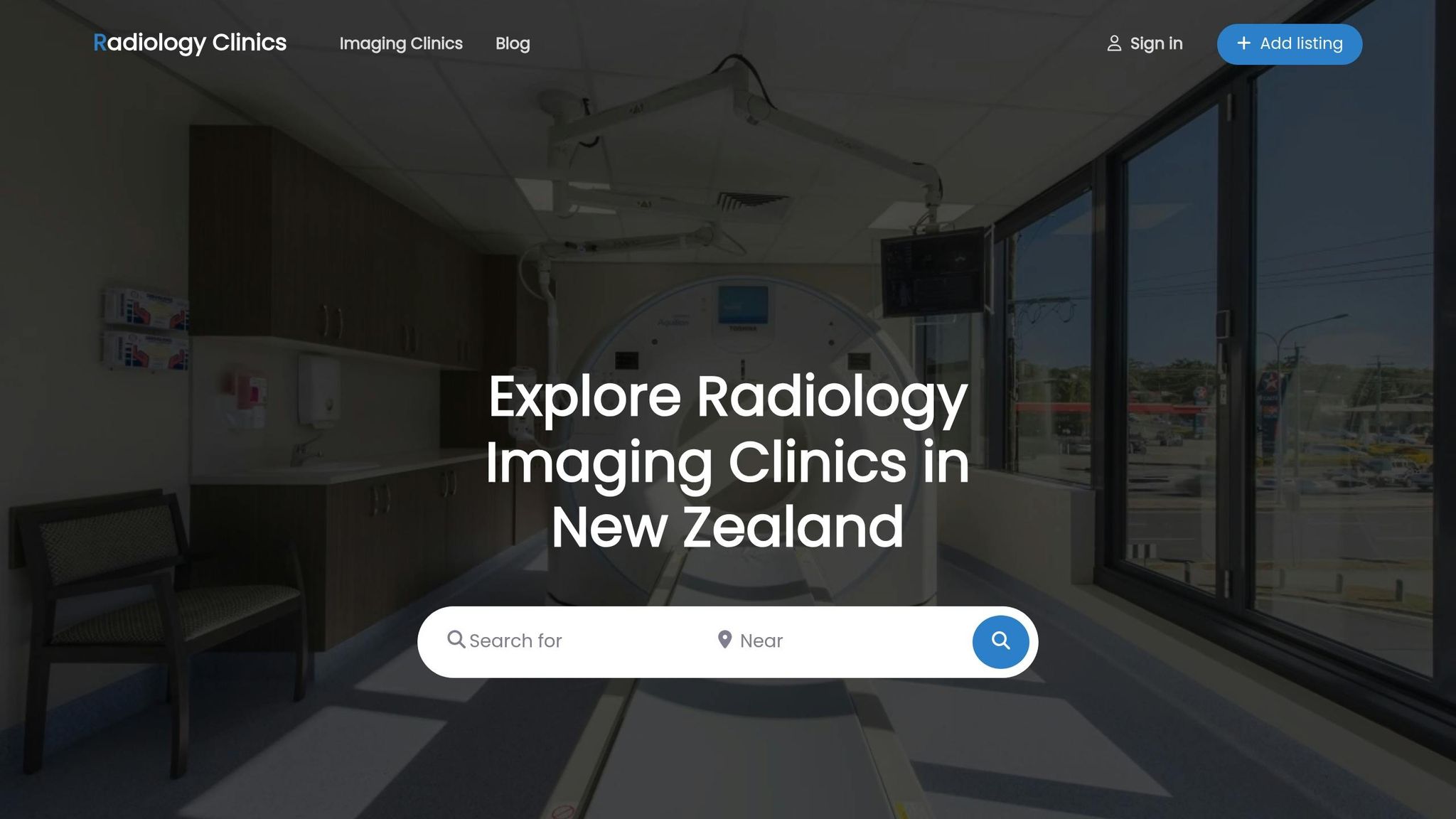
If you’re looking to cut down radiology wait times, choosing a conveniently located, trusted clinic makes all the difference. Radiology Clinics NZ offers a centralised directory to help you find nearby services with ease.
Searching for Clinics by Location
Radiology Clinics NZ features a directory of 252 radiology imaging clinics throughout New Zealand. You can refine your search based on service type, such as 29 Accident & Emergency Centres, 24 Ultrasound Clinics, or 22 Hospitals. Each result includes clinic addresses, and you can filter by region or imaging type – like CT scans or ultrasounds – to zero in on the most relevant options.
Once you’ve identified a clinic, you can dive into its profile for more details about services and patient feedback.
Reading Clinic Profiles and Reviews
Each clinic profile provides key information like contact details, operating hours (e.g., Monday–Friday, 8:30 am–5:00 pm), and the range of imaging services available – from MRI and CT scans to PET-CT and interventional procedures. Patient reviews add an extra layer of insight, offering firsthand experiences.
For example, Pacific Radiology – Porirua boasts a 5.0/5 star rating from 2 reviews. Sharyne Dallas shared:
"Had exray on leg and foot done by Linda at Pacific Radiology Porirua. She was so lovely funny efficient and l felt at ease with her".
Similarly, Greenlane Clinical Centre has also achieved a 5.0/5 star rating, with Linda Wong praising:
"Staff at the Greenlane Clinical Centre Radiology Dept delivered excellent customer service in the communication lead up and on the day care".
These reviews can give you a sense of what to expect, including feedback on appointment scheduling and overall service quality.
Premium-Listed Facilities
For quicker access, premium-listed clinics are showcased at the top of search results, offering enhanced visibility and detailed profiles. These clinics are featured in the "Top Radiology Imaging Clinics" and "Top rated listings" sections. Choosing a premium-listed facility – especially one with a 5.0-star rating – can streamline your search for quality care.
Conclusion
New Zealand’s radiology delays are driven by a combination of staff shortages, outdated equipment, and a growing annual demand of 6.5%. As of March 2025, over 102,000 patients were on radiology waitlists nationwide, with approximately 18,000 waiting more than 42 days for CT or MRI scans by June 2025. Dr Deborah Powell, National Secretary of APEX, aptly described the situation:
"Radiology is almost one of those touchstone areas… if there’s a blockage of radiology, then the whole system gets blocked and patients get delayed".
These challenges are daunting, but there are steps you can take. For instance, some programmes, like the one led by Dr Stephen Kara in Auckland, have demonstrated how innovative approaches can make a difference – reducing MRI wait times from three weeks to just five days. If you’re waiting for a scan and experience changes in your symptoms, contacting your GP could help prioritise your case. For those with private health insurance or the ability to self-fund, private radiology services can provide faster access, with MRI costs typically ranging between $799 and $1,089.
To simplify your search for timely imaging, Radiology Clinics NZ offers an easy-to-use directory. You can explore services by region, read verified patient reviews, and identify top-rated facilities through premium listings.
Taking proactive steps – like monitoring your symptoms, keeping appointments, and using resources like Radiology Clinics NZ – can help you access the imaging you need without unnecessary delays, whether through the public system or private care.
FAQs
How can I check my local CT or MRI wait time?
You can find CT or MRI wait times using the Diagnostic Dashboard by Health New Zealand (Te Whatu Ora), which provides details on regional wait times for diagnostic procedures. In some areas, such as Waitematā, updates may also be available on local health websites. For the most up-to-date information, it’s best to contact your local hospital or radiology provider directly, as wait times can differ depending on demand and available resources.
What can I do to get my scan triaged as urgent?
If you need your scan prioritised as urgent, it’s crucial to clearly explain the seriousness of your condition to your healthcare provider. Highlight why immediate attention is necessary. For critical situations, your provider can request an urgent or STAT scan on your behalf. Be specific about symptoms like intense pain or a sudden decline in your condition to strengthen your case. Ensuring your clinician fully grasps the urgency can help them advocate for faster scheduling within radiology services.
Will my health insurance cover a private MRI?
Yes, private health insurance in New Zealand can cover MRI scans, but it all comes down to the details of your specific policy. In some cases, you might still need to cover part of the cost yourself. It’s a good idea to review your policy documents or contact your insurance provider directly to get a clear understanding of what’s included.
Related Blog Posts
- 7 Tips for Finding a Radiology Clinic Near You
- Best Radiology Services for Families in Auckland
- Top PET Scan Clinics in NZ
- Checklist for Choosing Accessible Radiology Clinics

Author: Dr. Mark Bekhit
Dr Mark Bekhit (MBChB, FRANZCR) is a musculoskeletal radiologist practising in Brisbane and an AHPRA-registered specialist in diagnostic radiology (MED0002920947). He spends as much time building software as reading scans: he founded Imaging Finder (Australia) and Radiology Clinics NZ to make imaging easier to find, and builds radiology dictation and pain-tracking tools with one aim — better patient outcomes and a smoother reporting workflow. Outside the reading room he's usually training, bringing the same performance mindset to imaging.
Sources, method, and medical context
This article is published by Radiology Clinics NZ and reviewed for medical-adjacent accuracy by Dr. Mark Bekhit, radiologist. It is general information only and does not replace advice from your own doctor, referrer, clinic, insurer, or Health New Zealand service.
Official references
- Health New Zealand: scans and X-rays
- Health New Zealand: community-referred radiology service
- Radiology Clinics NZ: how the directory is built
Related directory pages
Radiology clinics directoryBrowse by scan typeBrowse by cityHow this directory is built
Last editorial review: 2026-06-30.
Leave a Reply